Irregular Migration and Human Trafficking: A Growing Protection Concern in Ethiopia
Irregular migration and human trafficking continue to be serious and interconnected protection challenges in Ethiopia and across the Horn of Africa. Each year, many Ethiopians particularly youth, women, and men undertake migration journeys in search of better employment opportunities, safety, and improved living conditions. While migration can be a positive pathway, irregular and unsafe movement through unregulated routes significantly increases the risk of exploitation and trafficking.
Human trafficking is a grave human rights violation and a criminal offense that involves the recruitment, transportation, transfer, harboring, or receipt of persons through force, deception, or coercion for the purpose of exploitation. This exploitation may include forced labor, domestic servitude, sexual exploitation, child trafficking, forced marriage, and other forms of modern slavery. Trafficking can occur both within Ethiopia and across international borders.
In Ethiopia, irregular migration is often driven by multiple factors, including unemployment, poverty, limited access to livelihood opportunities, and in some areas, social and economic instability. Conflict and displacement in different parts of the country also remain key drivers, forcing many individuals and families to move in search of safety and survival. As a result, many people become vulnerable to unsafe migration and exploitation.
Many individuals rely on informal brokers or unregulated recruitment agents, who often present false promises of employment abroad or in urban centers. In reality, these arrangements frequently lead to situations of exploitation, debt bondage, and trafficking.
Criminal networks increasingly use deceptive methods to recruit victims, including fake job advertisements, informal travel arrangements, and social media platforms. Once in transit or upon arrival at their destination, many migrants find themselves trapped in abusive working conditions, with confiscated travel documents, restricted freedom of movement, and threats or violence that prevent them from escaping.
The impact of trafficking is severe and long-lasting. Survivors often suffer physical injuries, psychological trauma, sexual and reproductive health complications, and deep emotional distress. Many also face stigma and social exclusion upon return, making recovery and reintegration difficult without structured support.
Beyond individual harm, human trafficking undermines community stability, weakens social protection systems, and contributes to organized crime. It remains a complex issue that requires sustained prevention, protection, and coordinated response.
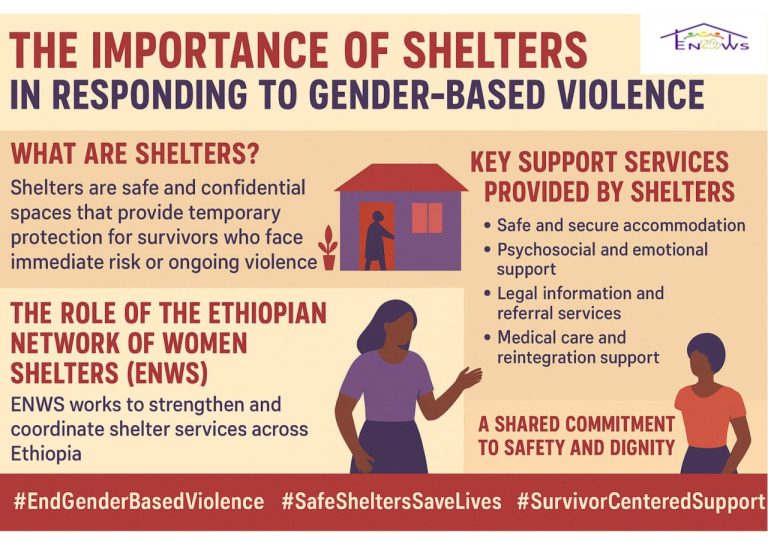
In response, organizations working in Ethiopia, including civil society networks, shelters, and protection actors such as the Ethiopian Network of Women’s Shelters (ENWS), play a critical role in addressing both prevention and response. ENWS works in collaboration with relevant government institutions, civil society organizations, and national and international partners to strengthen coordinated initiatives against trafficking and unsafe migration.
These efforts include community awareness raising on safe migration, identification and referral of survivors, provision of emergency shelter and psychosocial support, legal assistance, and coordination with relevant stakeholders to ensure comprehensive protection services.
Strengthening safe and legal migration pathways, expanding access to accurate migration information, and improving livelihood opportunities are key preventive measures. At the same time, ensuring survivor-centered protection services is essential for recovery, dignity, and long-term reintegration.
Ultimately, addressing irregular migration and human trafficking in Ethiopia requires collective and coordinated action. Communities, institutions, and partners must work together to reduce vulnerabilities, prevent exploitation, and protect the rights and dignity of all individuals on the move.