

January 7, 2026/
ለመላው የክርስትና እምነት ተከታዮች እንኳን ለብርሃነ ልደቱ በሰላም አደረሳችሁ! በዓሉ የሰላም፣ የጤና እና የመተሳሰብ እንዲሆን እንመኛለን፡፡
መልካም የገና በዓል!
የኢትዮጵያ ሴቶች መጠለያ ጥምረት
ለመላው የክርስትና እምነት ተከታዮች እንኳን ለብርሃነ ልደቱ በሰላም አደረሳችሁ! በዓሉ የሰላም፣ የጤና እና የመተሳሰብ እንዲሆን እንመኛለን፡፡
መልካም የገና በዓል!
የኢትዮጵያ ሴቶች መጠለያ ጥምረት
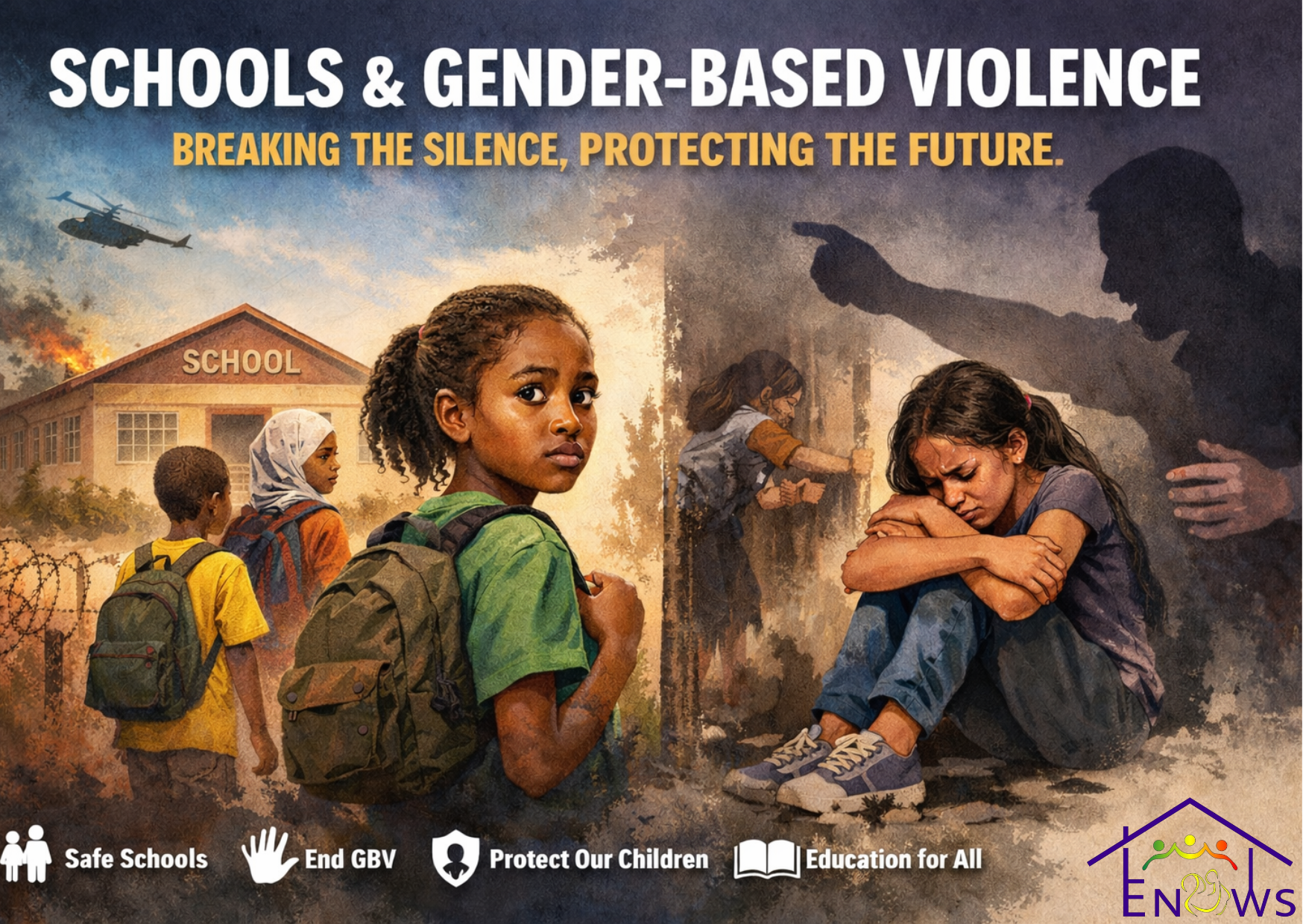
Schools are meant to be safe spaces where children learn, grow, and build their futures. However, for many girls and increasingly boys schools can also be places where gender-based violence (GBV) occurs or is ignored. GBV in and around schools is a serious human rights violation that undermines education, safety, and long-term development.
Understanding GBV in School Settings
Gender-Based Violence in schools can take many forms, including sexual harassment, sexual abuse, physical violence, emotional abuse, bullying, exploitation, and harmful disciplinary practices. It may be perpetrated by peers, teachers, school staff, or individuals in the surrounding community. In conflict-affected and fragile settings, the risks are even higher due to weakened protection systems, displacement, and insecurity.
Girls are disproportionately affected by school-related GBV, particularly adolescent girls, students with disabilities, and those living in poverty or displacement. However, boys may also experience violence, often remaining silent due to stigma and harmful gender norms.
The Impact on Education and Well-being
The consequences of GBV in schools are severe and long-lasting. Survivors may experience trauma, fear, anxiety, depression, and loss of self-esteem. Many girls drop out of school due to violence, early marriage, or pregnancy resulting from abuse. This not only limits their educational opportunities but also reinforces cycles of poverty, inequality, and dependence.
GBV also affects learning outcomes. Students who do not feel safe are less likely to attend classes regularly, participate actively, or perform well academically. Over time, this weakens education systems and undermines national development goals.
GBV in Conflict-Affected Contexts
In conflict-affected areas, schools may be targeted, occupied, or used as shelters, exposing students to heightened risks of violence. Displacement, family separation, and economic stress further increase vulnerability to exploitation and abuse. Weak accountability mechanisms and limited access to justice often leave survivors without support.
In such contexts, addressing GBV in schools requires conflict-sensitive, survivor-centered, and trauma-informed approaches that prioritize safety, confidentiality, and dignity.
The Role of Schools in Prevention and Response
Despite these challenges, schools can play a powerful role in preventing GBV and supporting survivors. Safe school environments are built through:
Education itself is a key tool for change. Teaching children about equality, respect, consent, and non-violence helps challenge harmful norms and build safer communities.
The Way Forward
Ending GBV in schools requires collective action from governments, educators, civil society, communities, and students themselves. Policies must be enforced, survivors must be supported, and perpetrators must be held accountable. Most importantly, children—especially girls—must be able to learn without fear.
Creating safe, inclusive, and protective school environments is not optional; it is essential for justice, equality, and sustainable peace.
#SafeSchools #EndGBV #ProtectOurChildren #GenderEquality #StopSchoolViolence #SurvivorCentered #TraumaInformed #ChildProtection #EducationForAll #ENWS